Day 1 — Trapped in the Snow, Unable to Move
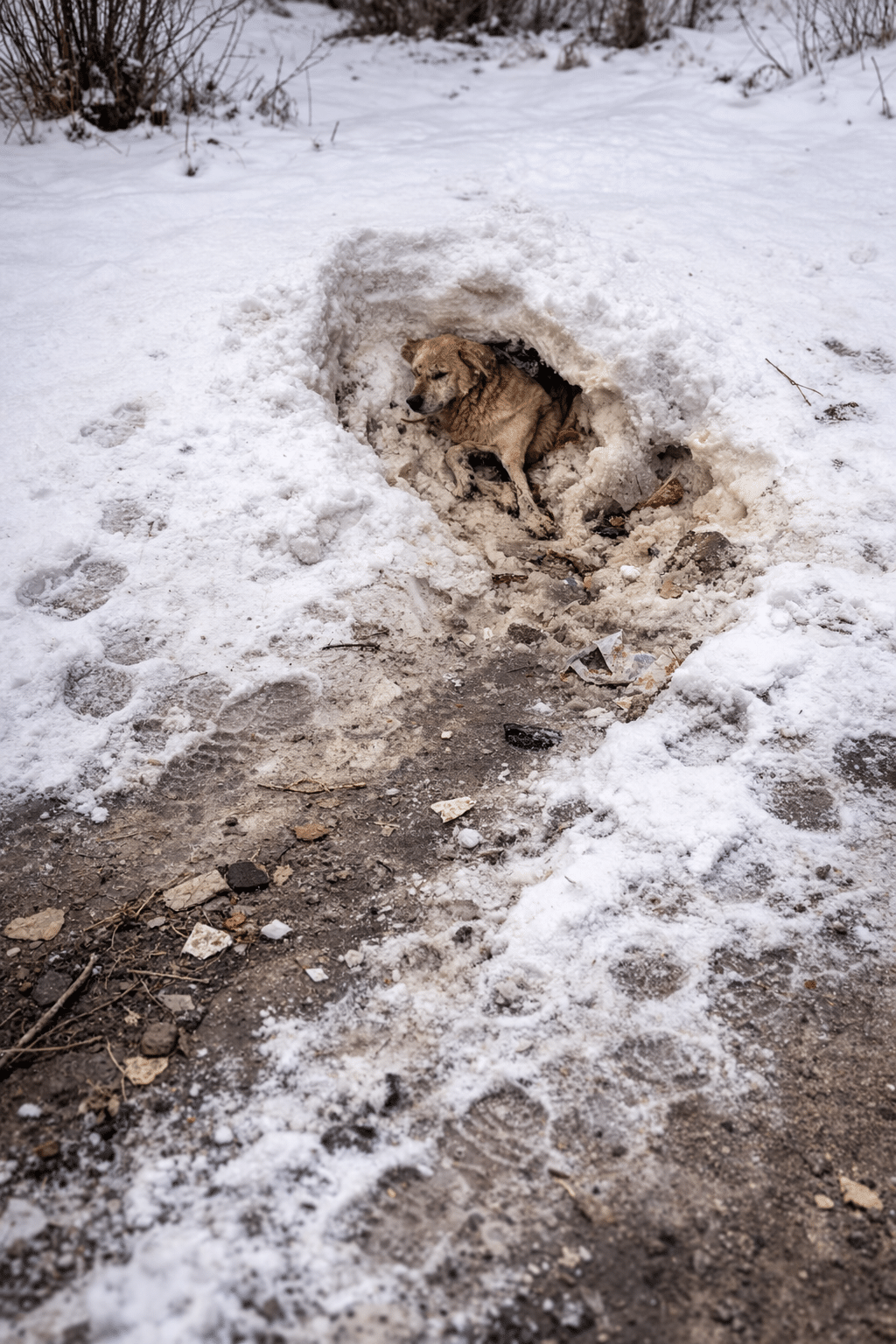
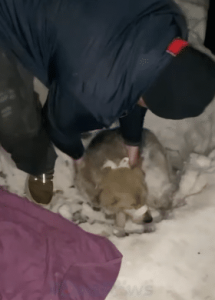
When they found Mishka, he was wedged deep inside a frozen snow pit.
For three… maybe four days, he had been stuck there.
He couldn’t run.
He couldn’t stand.
His body had gone stiff from the cold.
At first glance, rescuers feared hypothermia alone.
But once he was lifted out and examined, the truth was far worse.
X-rays revealed shattered pelvic bones — and multiple lead bullets scattered throughout his body. One of them sat dangerously close to his spine.
He was in unbearable pain.
And he couldn’t rise to his feet.
The veterinary team faced a high-risk decision. Pelvic surgery could do more harm than good. After careful deliberation, they chose another path: intensive pain control and early, carefully supervised physical therapy to prevent muscle deterioration.
For days, Mishka stayed under constant monitoring, receiving around-the-clock treatment.
By Day 10, he began assisted mobility training using a wheelchair and supportive harness.
No one could promise recovery.
But Mishka tried anyway.
Days 16–38 — The First Signs of Hope
Healing didn’t happen in a straight line.
Some days felt like setbacks.
But then came small victories.
His mood shifted first. He grew more responsive. More affectionate. More present with the people caring for him.
Then came a breakthrough moment: Mishka was able to relieve himself on his own — a critical sign that nerve function was gradually returning.
He was transferred to the Yuna Veterinary Center for advanced rehabilitation therapy, where specialists designed a structured recovery program.
Outdoors in the snow.
Indoors with mobility devices.
Learning to navigate life on wheels while rebuilding strength.
Progress was slow — but it was real.
Video: From a Frozen Pit to His First Steps on Grass — Mishka’s Turning Point
Days 40–110 — Rebuilding Through Water
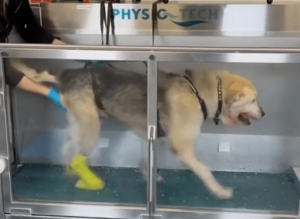
Hydrotherapy became the cornerstone of Mishka’s recovery.
On an underwater treadmill (aqua track), buoyancy reduced stress on his fragile pelvis while allowing his muscles to strengthen safely.
Each session was closely supervised.
Every step mattered.
By Day 72, his movements grew steadier.
By Day 110, something extraordinary happened.
Mishka walked on grass.
With his own legs.
Slow.
Careful.
But independent.
For the first time since the snow pit, he wasn’t supported by wheels.
Days 130–360 — A Completely New Chapter
As the months passed, Mishka changed in ways no one could have predicted.
The dog who once lay frozen and motionless began showing energy — even curiosity.
He entered foster care, where routine and steady affection became part of his daily life.
His coat thickened.
His muscles filled out.
His confidence returned.
Nearly one year after his rescue, on Day 360, Mishka ran again — across open snowfields, beside other dogs, beneath wide winter skies.
The bullet near his spine was still there.
But it no longer defined him.
What Mishka’s Journey Teaches Us
This wasn’t a single miracle.
It was repetition.
Rehabilitation.
Pain management.
Structure.
Consistency.
It was a team that refused to give up.
From being immobilized in the snow with fractured bones to running freely one year later, Mishka’s story is proof of what dedicated medical care — and relentless patience — can accomplish.
If this story touched you, watch the full video above and see how 360 days of steady recovery turned near-paralysis into movement — and despair into freedom.