Every rescue dog arrives with a story.
Comfy arrived with a contradiction.
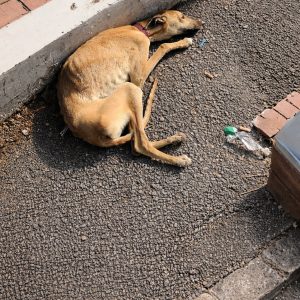
He had been found unable to move—his spine damaged, his hind legs completely unresponsive. But what unsettled rescuers most wasn’t just the paralysis. It was the strange detail: his back legs had been loosely tied together.
No one could explain it. Was it ignorance? A misguided attempt to help? Or something worse?
Whatever the reason, it left a mark that went far deeper than physical injury.
At first, his condition seemed straightforward—spinal trauma, muscle loss, months of rehabilitation ahead.
But Comfy was never going to follow a simple path.
The Calm That Wasn’t Real
In the beginning, Comfy seemed almost… peaceful.
He ate without fuss. He didn’t resist. He didn’t snap or growl. There was a quietness about him that made the staff believe he was naturally gentle.
That’s how he got his name—Comfy.
But what they saw as calm was something else entirely.
It was shock.
As medication eased his pain and awareness returned, everything changed. The quiet dog vanished. In his place came fear—loud, defensive, impossible to ignore.
He barked. He growled. He snapped at anyone who came too close.
Not out of aggression.
But out of memory.
VIDEO: From Paralyzed Pup to Joyful Jogger — Comfy’s Six-Month Journey Back to Life
The Deeper Wound Was Trust
It quickly became clear: Comfy’s greatest injury wasn’t just physical.
It was emotional.
Without daily therapy, his body would never recover. His spine needed movement. His muscles needed work. But Comfy refused to be touched. Every attempt triggered panic.
And so the paradox revealed itself:
To walk again, he needed human hands.
To accept those hands, he needed to feel safe.
And safety… couldn’t be rushed.
The team changed their approach.
No more forcing.
No more grabbing.
Only patience.
They sat quietly near him. Spoke in low voices. Offered food without reaching in. They honored his space instead of invading it.
Healing didn’t start with movement.
It started with stillness.
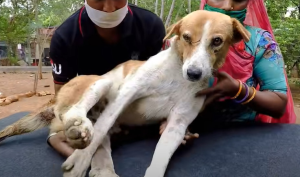
A Small Beginning
Progress didn’t come with a breakthrough moment.
It came quietly.
One day, his tail moved.
Just a flick. Barely noticeable. But it meant everything.
It was the first sign that something inside him was shifting.
Soon, the growls softened. The barking faded into watchfulness. Fear slowly made room for curiosity.
And then, one day, Comfy leaned—just a little—toward a human presence.
That was the moment everything began to change.
Teaching the Body to Remember
With trust slowly rebuilding, therapy could finally begin.
It wasn’t easy.
Muscles that hadn’t worked for months resisted every effort. Exercises drained him. Some days, he refused completely. Other days, frustration took over.
But something was different now.
He wasn’t fighting the hands anymore.
He was starting to rely on them.
Little by little, his body began to remember what it once knew.
From Stillness to Steps
Nearly six months after arriving unable to stand, Comfy did something no one could forget.
He took a step.
Unsteady. Awkward. Fragile.
But it was his.
And it was only the beginning.
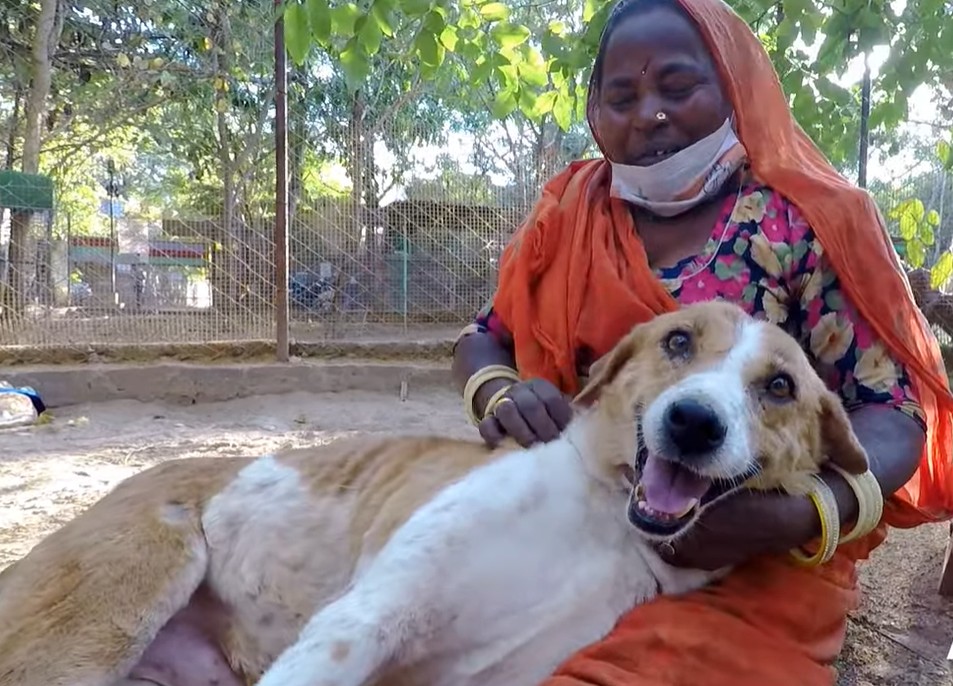
Today, Comfy runs.
The dog who once feared every touch now sprints with joy. The team even gave him a new nickname—the Joyful Jogger.
The ropes that once bound him no longer define his story.
What Comfy Leaves Behind
This isn’t just a story about recovery.
It’s a story about patience.
About understanding that sometimes healing begins in the heart, not the body. That fear is not failure—it’s survival.
And that the ones who push us away the hardest…
are often the ones who need us the most.
Comfy didn’t just learn to walk again.
He learned that being held didn’t have to hurt.